Notes From the Underground: 77 Articles That Bring the Past to Life

By Thorne Dreyer

ISBN: 978-1-304-79374-4

New Journalism Project Publishing is proud to announce the publication of Notes From the Underground: 77 Articles That Bring the Past to Life. Notes from the Underground is a collection of author Thorne Dreyer’s writing from 1966 to the present.  Earlier work is taken from the 60s and 70s underground press – The Rag in Austin, Liberation News Service, and Space City! in Houston. The articles demonstrate the power of participatory journalism. Dreyer’s later writing reflects on the cultural and political upheaval of earlier decades and sheds light on contemporary issues.
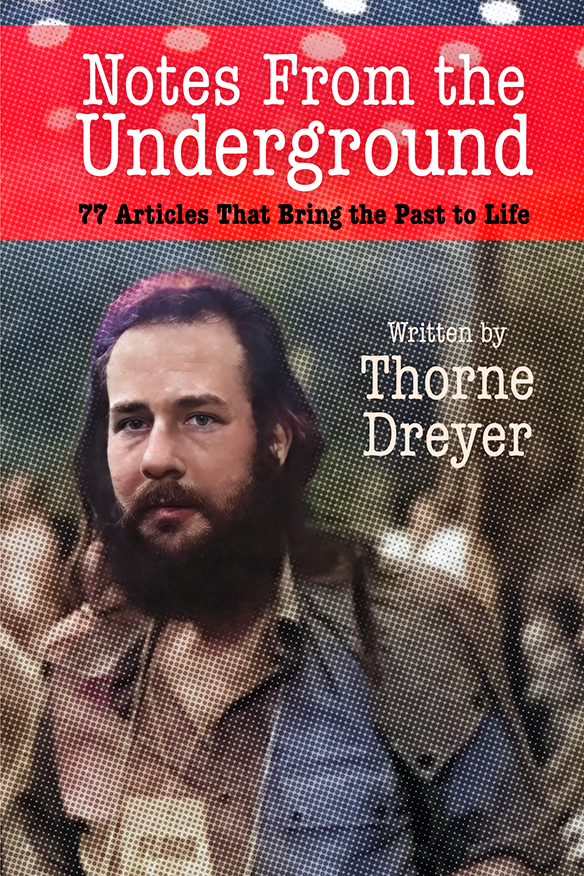
Thorne Dreyer is a director of the New Journalism Project.  He is also host and producer of Rag Radio, a syndicated program that originates on KOOP FM, a cooperatively run community radio station in Austin, Texas, and is editor of The Rag Blog, a progressive internet newsmagazine.  Dreyer was a pioneer of the underground press in the 1960s and 1970s, when he was a founding editor of The Rag in Austin and Space City! in Houston.  He was general manager of KPFT FM, Pacifica radio in Houston, operated a leading public relations business there, and worked with progressive political campaigns.

Dreyer’s parents were prominent Houston artist Margaret Webb Dreyer and writer Martin Dreyer, whose Dreyer Galleries was a gathering spot for artists and activists.  Dreyer was an editor of Celebrating The Rag (2016) and Exploring Space City! (2021), and author of Making Waves (2022).  

Collected Art of Solidarity: Austin, Texas, 1974-89

ISBN 978-1-4357-7113-0

Edited by Alice Embree and Carlos Lowry

New Journalism Project Publishing is proud to announce the publication of Collected Art of Solidarity: Austin, Texas, 1974-89. This 96-page book features color reproductions of posters and leaflets that highlight the diversity of activism in Austin, Texas in the 1970s.

Austin, Texas was a hotbed of progressive organizing in the 1970s.  Women, lesbians, and gays targeted sexism and homophobia and created new organizations and alternative institutions.  The Brown Berets organized against police violence, the Town Lake boat races, and gentrification of vibrant East Side neighborhoods.  The Austin Committee for Human Rights in Chile defended human rights in that country, exposed the horrors of the military dictatorship, and protested U.S. complicity with the Chilean coup.

The editors felt fortunate to have participated in much of this insurgency, as printers and designers of leaflets and posters.  Fly By Night Printing Collective, and its later incarnation, Red River Women’s Press, allowed us to spread messages of solidarity with printed material and colorful silk-screened posters that marked major events.  The union bug of Red River Women’s Press is visible on much of this work.  Other artists contributed their talents and are credited in the captions for this collection.

This is not a comprehensive collection of artwork.  It is gathered from material the editors have collected, leaflets and posters we had a hand in creating.  Some of this material has an archival home with the University of Texas Briscoe Center for American History.

Stories from Wimberley 1928-29

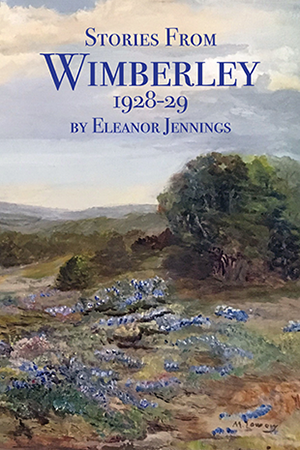
Image

New Journalism Project is pleased to announce the publication of a new book available at Lulu.com.

Stories from Wimberley 1928-29 by Eleanor Jennings provides a glimpse into small town life in the Texas Hill Country in the last century.  Eleanor Jennings was eight years old when she moved to Wimberley.  Her stories are childhood memories of family gatherings, school, the Wimberley Square, and the natural beauty of Cypress Creek and Blue Hole. 

The author’s daughter, Ann de Rouffignac, compiled the stories, family photos, and historical photos that enhance the written words.  The author, Eleanor Jennings, died in 2019.  New Journalism Project is pleased to mark what would have been the author’s 100th birthday with the publication of her stories.

John W. Poe, an officer of the Wimberley Institute of Cultures, knows local history is familiar with Eleanor Jennings’ childhood home.  He writes:

Eleanor Jennings’ stories really make the history of Wimberley in the late 1920s come alive.  The Wimberley Institute of Cultures (WIC)… was fortunate to acquire and preserve the old Wimberley-Hughes House a few years ago.  Eleanor Jennings lived in the house at the time of her stories which makes them all the more special to us.

Peter Wray, the founder of Blue Hole Park, says:

I have been coming to Wimberley continuously since 1945 to a house my grandfather built.  It is just downstream on the Cypress Creek from the Rock House.  Eleanor Jennings’ stories bring alive the life in Wimberley in 1928 and 1929 and will be treasured by our entire family.

And Mike August, formerly with Houston’s Pacifica radio station KPFT, and more recently involved with Wimberley Valley Radio, provides this insight:

These stories show how much and how little Wimberley has changed over the years.

New Journalism Project is pleased to collaborate with the author’s daughter in the publication of these stories.  The book’s cover, designed by Carlos Lowry, features a Hill Country vista painted by a relative of the author.